Every September I write a wrong equation on the board and wait. This year it was v = a·t². It takes about forty seconds before somebody frowns. Velocity comes in meters per second, acceleration in meters per second squared, and multiplying that by a time squared gives plain meters. Meters on one side, meters per second on the other. The equation can’t be true, and we haven’t done any physics yet. We’ve only looked at the units.
That check has a proper name: dimensional analysis. Every quantity drags its unit along, and the units on both sides of an equals sign have to agree, the same way the number of terms does. It costs about ten seconds per equation and catches a remarkable share of mistakes before anyone reaches for a calculator.
The ten-second check

Take a plain problem. A car accelerates at 2 m/s² for 5 s. Its speed is v = a·t = 2 m/s² × 5 s = 10 m/s. Watch the seconds: the acceleration carries s² downstairs, the time brings one s upstairs, so a single s survives downstairs. 10 m/s is 36 km/h, which is plausible for a tired hatchback. If your arithmetic had said 10 m/s², the units would have complained before the answer sheet did.
The same habit handles conversions. One kilometer per hour is 1000 m divided by 3600 s, so 1 km/h = 0.278 m/s. When you multiply a speed by that ratio, the old unit cancels, because the ratio equals 1 and multiplying by 1 changes nothing. It’s ordinary arithmetic dressed in units.
History supplies a fine warning. In 1999 the Mars Climate Orbiter was lost because one engineering team computed thruster impulses in pound-force seconds and the navigation team read them as newton seconds. The conversion factor is 4.45, and the spacecraft missed Mars. The units failed that day, along with a probe worth about $125 million. When I tell this story, the room gets very quiet, and the next homework comes back with units on every line.
Guessing formulas from units
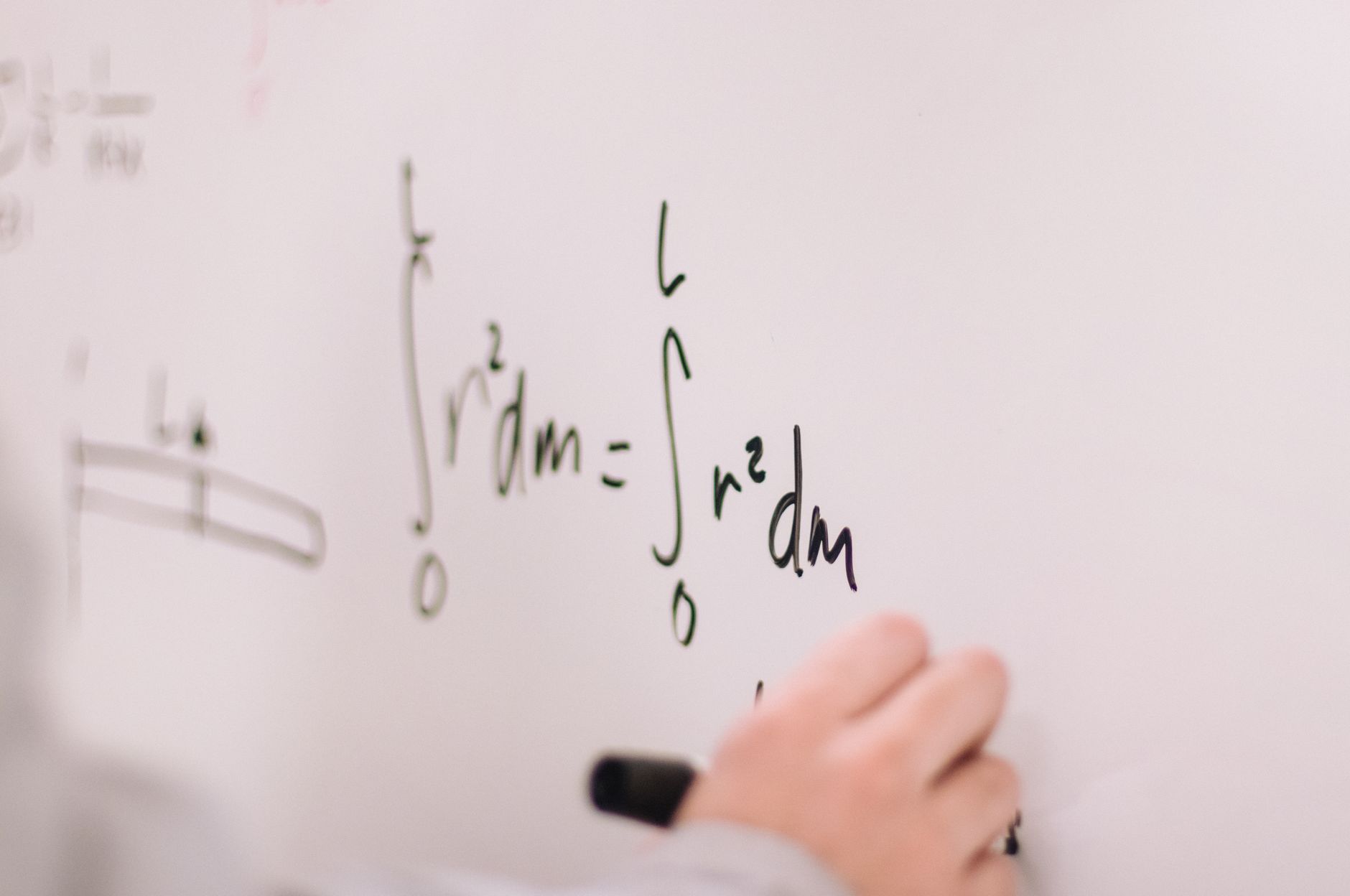
Units can also build formulas, which students find slightly suspicious the first time. The period T of a pendulum depends on its length L, the bob’s mass m, and g = 9.8 m/s². Does the mass matter? Mass lives in kilograms, and no combination of kilograms alone produces seconds. Drop it. Look at L/g instead: its units are (m)/(m/s²) = s², and a square root gives seconds. So T = C·√(L/g) for some number C. Time a 1 m pendulum once and you get about 2 s per swing, so C is close to 2π. There’s the formula, and nobody solved a differential equation.
A 1 m pendulum really does swing with a period near 2.0 s. Try it with a shoe on a shoelace and a phone timer. If you measure 1.5 s, you either started counting at the wrong place or own a very short shoelace.
Where it saves you later

Units also connect topics that look unrelated. Pressure is force over area, so 1 Pa = 1 N/m², and a car tire at 220 kPa holds 220,000 N on every square meter, about 2.2 atmospheres. The newton itself breaks down into base units: 1 N = 1 kg·m/s². Nobody needs to memorize that. You rebuild it in ten seconds when you need it.
Once the numbers get large, units are the cheapest sanity check available. A car battery stores roughly 5 × 10⁶ J. A cup of hot tea carries about 2 × 10⁵ J. If a calculation tells you the kettle boiled with 3 J, you dropped a factor somewhere. If it tells you the tea holds 2 × 10¹⁰ J, you’ve invented a small bomb, and I’d like to see the kitchen.
So I keep the habit on the board all year. Write the unit next to every number, cancel units like fractions, and read the answer’s unit before you read its digits. The digits tell you the size. The unit tells you what you actually found, which is usually the harder question.